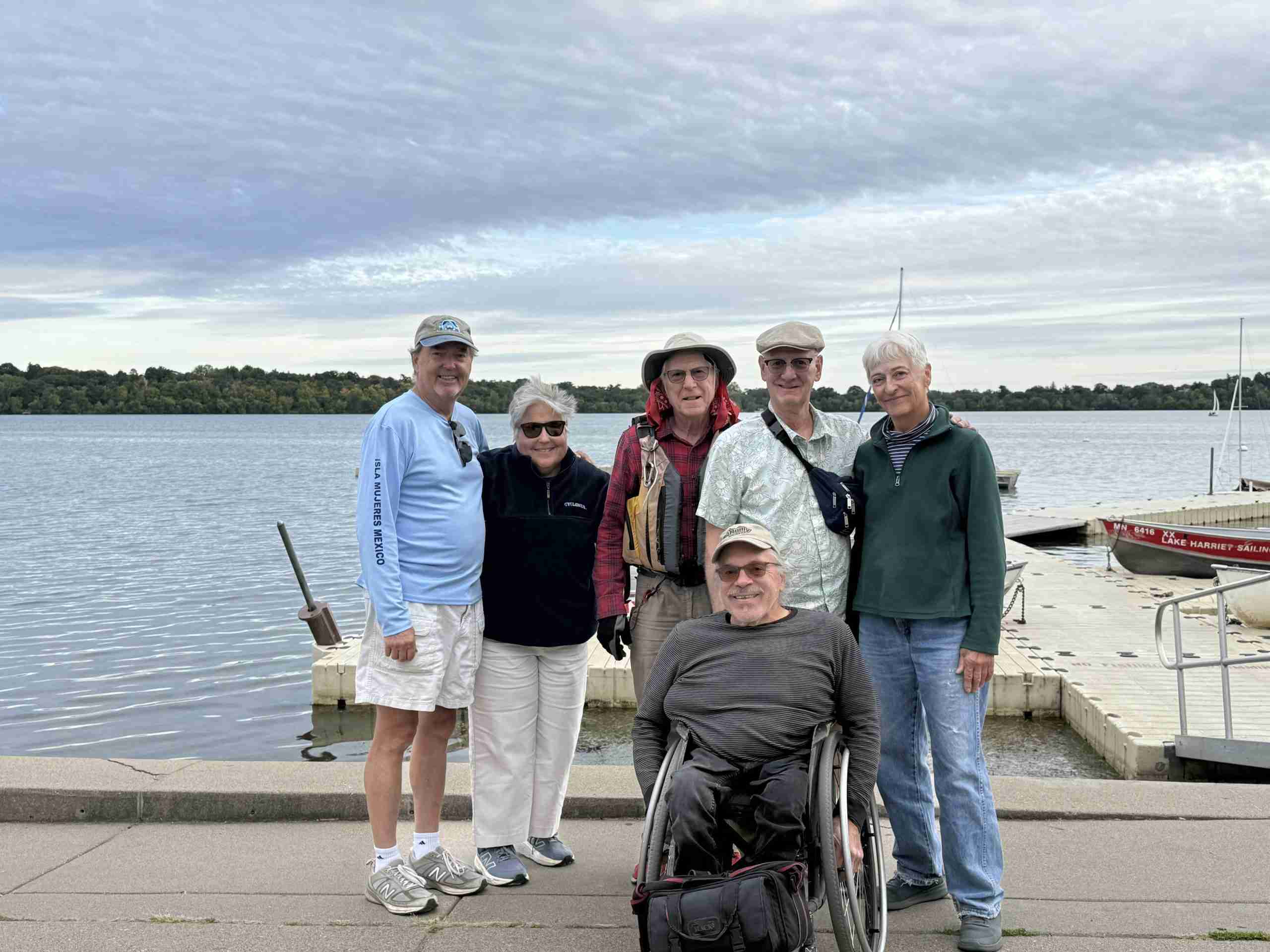
Trees sway from a calm breeze and ripples move across Lake Harriet on a late summer afternoon. On the water there’s a sense of peace.
“You can hear the waves, the water, the sound of the water, and then the wind in the sail, it’s very peaceful and relaxing,” Paul Van Winkel, an adaptive sailor, said.

The Lake Harriet Yacht Club’s adaptive sailing program gives people with physical disabilities the opportunity to experience the freedom of sailing.
The program typically meets on Mondays at 5 p.m., and volunteers help sailors get the boat ready, get into the boat and leave the dock.
But when the sailor is out on the water, volunteers are taught to let them make the calls.
“I think, like many adapted programs, the key is being in tune with the sailor and asking them, does this feel right? Do you think you’re in the right position? Should we go down now? Should we not, that kind of thing,” Wendy Ott, an adaptive sailing program volunteer, said.
The program’s overall goal is for people to come out and gain independence on the water.
“A lot of people they sit in a wheelchair, they need help, and once they get in a boat, they don’t need help anymore. They can do everything themselves,” Van Winkel said.
What it means to sailors
For some sailors, this is a second chance to do what they love.
Evan Newton first learned to sail at 13 and sailed regularly before a progressive nerve disease affected his mobility. The last time he sailed was in 1999, and he was using crutches.
That changed when he found Lake Harriet Yacht Club’s adaptive sailing program in 2015.
“It just means everything. It’s just so life-affirming. To be able to do something that you’re so certain you were meant to do. Right? And without the volunteers, I wouldn’t be able to do it,” Newton, 12th-season sailor, said.

When Newton started with the program, it used to take multiple volunteers and half an hour to get him in the boat.
But over the years, Newton and others helped develop a new lift method that now takes just five minutes and is much safer.
“We use a swim lift that’s battery-powered with a sling. So they put a sling under me, hook it up to the lift, and it lifts me out of the chair. They swing it over the boat, lower me down into the boat,” Newton said.
For Newton, sailing was something he had some experience with, but he encourages people to come out and try it.
“Some of the days when the wind is five or six miles an hour, it’s just perfect for a beginner. So, it’s just a matter of hanging out, trying it and developing the skills and the experience,” Newton said.
More than just sailing
The program not only helps people with disabilities get out on the water and learn to sail, but it also gives everyone a sense of community. Whether they’re a sailor or a volunteer, the day ends together.
“One of the parts that I love the most, I’m going to cry saying this, but it’s just afterwards, everybody comes up around the picnic table and sometimes we do a potluck, sometimes it’s somebody’s birthday, sometimes people hang out, and so there is camaraderie at the table,” Ott said.
And it doesn’t matter if you’re more interested in the community aspect of the program. Nobody will push you to get out on the water; you can simply hang out and talk with the volunteers and other sailors.

“One gentleman that my husband and I used to bring down, a family friend, said to his mom, ‘I really don’t like sailing that much. I just like hanging out down at the lake with Aunt Wendy and Uncle Chuck and the rest of the sailors.’ And that met a need in his life, and so we didn’t push him to go out and sail after that,” Ott said.
Getting ready for next season
After wrapping up their 20th season, the Lake Harriet Yacht Club will now work on some of the boats during the winter so they’re ready for next season.
“They’ll be taking some of the boats off of the lake, some of our volunteers, and we have one guy who will store four of the boats at his house, and then somebody else will take a boat and they’ll work on it over the winter, one of the ones that needs repair,” Newton said.
For people with different physical abilities and volunteers, it’s a chance to enjoy a sense of independence and connection.
“People should try to come sail because they don’t know what they’re missing,” Van Winkel said.