Minnesotans with disabilities are protected by an overlapping framework of federal and state laws designed to prevent discrimination, guarantee equal access, and ensure accommodations. These laws are all the result of laws enacted by politicians. And almost all laws were shaped by community advocacy affecting those politicians.
See our list below of the rights we have that came from the lawmaking job of politicians: employment, housing, public accommodation, education, government services, and voting rights.
All of these laws, and the budgets that support them, result from “politics.” We can hate politics, but we can’t afford to ignore them!
Don’t forget to research and vote for judges, too.
Judges are the ones who make decisions about how laws are interpreted. Maybe the biggest judicial impact on the lives of Americans with disabilities is the Olmstead decision of 1999 (Olmstead v. L.C.), in which the U.S. Supreme Court laid out the “integration mandate:”
The Supreme Court ruled 6-3 that states must provide community-based services to people with disabilities instead of institutionalizing them when three conditions are met:
- Treatment professionals determine that community placement is appropriate.
- The affected person does not oppose the transfer.
- The placement can be reasonably accommodated, considering the state’s resources and the needs of others receiving disability services
Disability Rights Protected by LAW
1. Employment Rights
- Protection Against Discrimination: Employers cannot discriminate based on physical, sensory, or mental disabilities during recruitment, hiring, promotions, pay, or termination.
- Broader State Coverage: While the federal Americans with Disabilities Act (ADA) applies to employers with 15 or more employees, the Minnesota Human Rights Act (MHRA) protects workers at employers of any size.
- Reasonable Accommodations: Employers are legally required to provide reasonable job modifications—such as flexible schedules, specialized software, or modified equipment—unless doing so creates an undue financial or operational hardship.
- Interactive Process: Under state law, employers must participate in an interactive, good-faith dialogue with employees to determine effective workplace accommodations.
2. Housing Rights
- Equal Housing Access: Under the federal Fair Housing Act (FHA) and the MHRA, landlords and real estate providers cannot deny housing, set different terms, or refuse to rent based on a disability.
- Modifications and Accommodations: Tenants have the right to request reasonable modifications to physical spaces (e.g., installing grab bars or ramps) and reasonable policy changes (e.g., waiving “no pets” policies for service animals or emotional support animals).
3. Public Accommodations and Service Animals
- Access to Businesses and Services: The ADA (Title III) and MHRA require businesses, non-profits, and venues open to the public (restaurants, stores, theaters) to remove physical architecture barriers where feasible and provide equal access.
- Service Animals: State and federal laws guarantee the right to bring a service animal into all places of public accommodation without paying additional fees or deposits, as long as the animal is controlled.
4. Education Rights
- K–12 Education: Under the Individuals with Disabilities Education Act (IDEA) and Section 504 of the Rehabilitation Act, children are entitled to a Free Appropriate Public Education (FAPE) in the least restrictive environment, implemented through an Individualized Education Program (IEP) or 504 Plan.
- Higher Education: Colleges, universities, and vocational schools must provide equal educational access, auxiliary aids (such as sign language interpreters), and academic accommodations.
5. Government Services and Voting
- Accessible State & Local Services: Title II of the ADA and Minnesota state policy mandate that all state agencies, local governments, courts, and public transit systems provide accessible programs, facilities, and communications (including digital access under Section 508 guidelines).
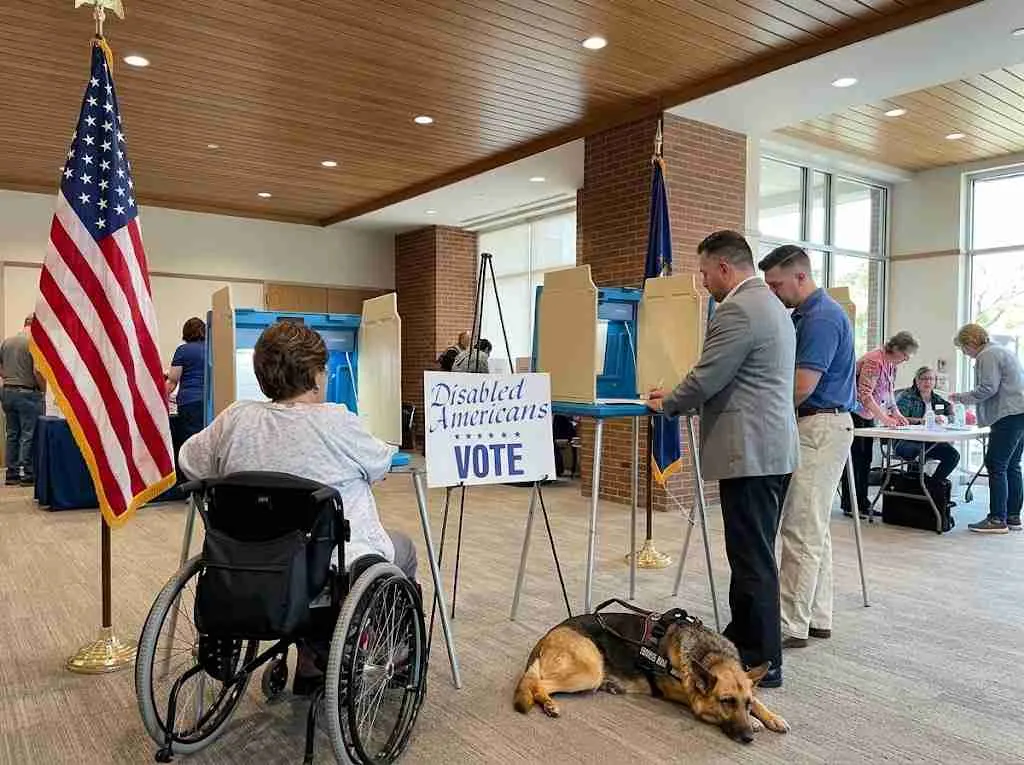
- Voting Protections: Under federal voting rights statutes and Minnesota election laws, voters with disabilities have the right to accessible polling places, accessible voting machines, and assistance when casting a ballot.
Enforcement and Dispute Resolution
If disability rights are violated, Minnesotans can file complaints through:
- State Level: The Minnesota Department of Human Rights (MDHR) enforces the MHRA.
- Federal Level: Agencies such as the U.S. Equal Employment Opportunity Commission (EEOC) for workplace issues, or the U.S. Department of Housing and Urban Development (HUD) for housing matters.
Wear that “I Voted” sticker proudly!