Many Minnesotans, including people with disabilities, are worried about whether they will have health care coverage in the future and how that coverage could change.
Impacts of recent federal action are being eyed warily. How Minnesotans on Medicaid will be affected by the Reconciliation Act is unclear. One estimate is that up to 250,000 people here could lose Medicaid coverage over the next decade.
An estimated $1 trillion in cuts could result in as many as 12 million Americans losing their coverage. That number is from a Kaiser Family Foundation analysis.
There is currently an estimated cost of about $12 billion per year for the 1.3 million Minnesotans currently on Medicaid. That includes people with disabilities as well as low-income Minnesotans and children.
One stereotype of people on Medicaid and other programs is recipients don’t work. But that is not the case. The Kaiser Family Foundation estimates that around two-thirds of people on Medicaid between 19 and 64 are already employed. Some are exempt due to disability, illness or responsibilities including caregiving for someone else.
The Minnesota House Fraud Prevention and State Oversight Committee met July 8 to discuss the impacts of Medicaid changes.

State officials are continuing to analyze the overall impacts of the reconciliation act, which President Donald Trump signed into law in early July. An array of concerns have been raised about various cuts that would affect health coverage and many other programs. Another issue being eyed is when various cuts take place.
Many new Medicaid requirements won’t to go into effect until early 2027, after the midterm elections. But other public assistance, such as food assistance, are taking effect sooner.
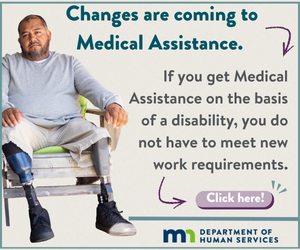
One big change that will affect individuals is a work requirement. The changes bring a work requirement of 80 hours per month for people between the ages of 18 and 64, so that they can receive benefits. Medicaid providers will have to do monthly and quarterly checks on client eligibility and addresses, as opposed to a longstanding requirement for annual checks.
Minnesota Medicaid Director John Connolly told those at the hearing that the added paperwork could prompt some people to drop Medicaid entirely. The work requirement and other record-keeping requirements could bring even more work at the county level. A huge worry county officials have outlined in recent months is that more social services costs could fall on Minnesota counties and their property taxpayers.
Minnesota is one of 10 states where counties handle Medicaid. One estimate cited at the committee meeting is that the increased workload could bring $160 million in added costs for counties. While Twin Cities area counties could see the highest costs, smaller, rural counties could be hard-hot by any type of budget increase.
Matt Freeman of the Association of Minnesota Counties outlined the concerns, and the fact that workloads could double for some counties. “We’re expecting property tax burdens to counties, increased workload for the folks that are currently working on eligibility, we’re concerned about the ability to add that workforce. Making the system more complex with more steps doesn’t inherently prevent fraud.”
One issue outlined July 8 is the loss of about $500 million in federal reimbursements for nursing homes and hospitals, which could force some places to close. Department of Human Services Commissioner Shireen Gandhi discussed those issues with the committee.
The state has already had losses in hospital services. Nursing home closures are already a concern. Some statistics indicate that Minnesota has lost 41 nursing homes since 2007. Twenty-three of the closures were between 2019 and 2023. Eight nursing homes closed in 2023 alone.
Of the nursing homes that have closed since 2007, 31 were in rural areas.. The reconciliation act doesn’t specifically name hospitals that would close. Various news reports have indicated that Fairview Range Regional Medical Center in Hibbing and Mayo Clinic Health System in Fairmont could close.
The Minnesota Budget project continues to provide information about Medicaid impacts. It leads the This is Medicaid Coalition.
The nonprofit recently held a conference call with news media. Laura Mortenson, who works with the budget project, pointed out that more than half of Minnesotans in nursing homes utilize Medicaid. So do people using child care programs and housing programs. UCare woes Financial issues at UCare will force about 88,000 people to switch Medicaid health plans by September. The Minneapolis-based health maintenance organization will stop providing state-funded coverage in 11 Minnesota counties. The service area reduction affects clients in the Prepaid Medical Assistance Program (PMAP) and MinnesotaCare.
Benton, Chisago, Crow Wing, Pennington, Ramsey, Roseau, Sherburne, Stearns, St. Louis, Wadena and Wright are the counties affected.
UCare is one of Minnesota’s largest health insurers. Much of its business is with clients who are in publicly funded programs.
The changes aren’t affecting seniors and people with disabilities on the special needs plans according to information from UCare. Nor are the cuts tied to what is happening at the federal level with Medicaid. Instead UCare has cited significant losses in Medicaid due to a payment issues.
Nor do the changes affect UCare’s Medicare Advantage health plan. It provides coverage to about 180,000 seniors in Minnesota. Medicare Advantage is a form of Medicare through which seniors can seek government-funded benefits through private health insurers. UCare’s work to provide coverage for individuals and families through the MNsure health insurance exchange also is not affected.
Media reports indicate that UCare has had substantial losses with its Medicaid and Medicare Advantage programs. Medicaid, which provides coverage for lower-income residents, is UCare’s largest line of business.
DHS, which administers the state’s Medicaid program, is helping people transition to other plans.