

Emily Goldberg has twin sons with autism. At the age of six, one of her sons had a friend he always played with at recess, but when another kid joined, her son felt left out, sitting on the curb and watching them play.
“He came home crying, and he said: ‘Mom, nobody understands me, not even you, because your brain works different than mine’,” Emily Goldberg, founder of the Autism Mentorship Program, recalled.
This made Goldberg think about how important it would be for her sons to have a role model who processes the world the same way they did. It led to the creation of the Autism Mentorship Program (AMP), designed by autistic adults and allies to support autistic youth.
“It was really important to me that autistic people be involved in the design of the program,” Goldberg said.
AMP can serve both young people and autistic adults by giving adults a chance to be role models and youth a chance to build confidence.
This is an area the Autism Society of Minnesota (AuSM) hopes to better reach in the future.
“We have a little bit of a gap in our ability to serve young people. It’s a difficult age range to serve,” Darren Howard, Interim Executive Director for the Autism Society of Minnesota, said.
Now that AMP is part of AuSM, they hope to grow the program even more.
“We are in a place where we can offer them greater operational infrastructure, a supportive program department, supportive fundraising mechanism, and they are able to bring a tested program where the work that they do has been evaluated by their research partner at the University of Minnesota,” Howard said.
Reaching a larger audience
AuSM serves thousands of autistic adults and hopes to bring more people to the mentorship program and make it year-round.
“They are serving youth and adults within the metro area. And we serve the whole state. So we have an opportunity to serve the whole state because it’s an online program; and we have the opportunity to significantly expand the number of people served, and with additional resources, we are at least going to consider making it a year-round program,” Howard said.
Beyond growing the program statewide, Goldberg hopes AuSM can help them reach anyone in need, not just people with the time and resources to find them.

“There are some people out there who really could use our services who don’t even know about them. We’ve tried to do things in schools because that’s a great way to connect … with as broad a cross section of the population as possible. So I’m also hoping that we can do that through AuSM,” Goldberg said.
AMP has developed documentation explaining how the program works. Through AuSM, Goldberg hopes to help other autism organizations learn how to implement the program in their own communities.
“We’ll be able to package that stuff and be able to send it to any autism society around the country so that they can replicate it, as best as possible,” Goldberg said.
The program connects participants online, which helps remove economic and educational barriers and makes it easier to connect within the community.
“So many things happen in the larger metro or at least in the larger cities, and this is a chance for people to volunteer from home,” Howard said.
The program impact
For Anna Voight, an AMP mentor who was diagnosed with autism later in life, the program offers support she wishes she had growing up.
“If I would have had an autistic mentor that truly understood…if I would have had that, I think it just would have been such a game-changer,” Voight said.
Voight initially thought being a mentor meant helping her mentee through challenges and offering guidance from lived experience.
“I went into it thinking this is gonna just be like every other mentoring program. It was not,” Voight said.
Sometimes their sessions meant just watching YouTube videos, which left Voight wondering if she was cut out to be a mentor, but near the end of her first year, that changed.
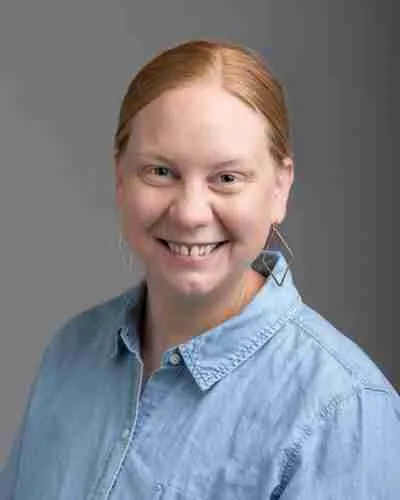
“My mentee and I got asked to speak to some group about AMP and our experiences. And my mentee basically was like, AMP’s my favorite thing all week. I love talking to Anna,” Voight said.
This caught Voight off guard because she had no idea that she was making such a big difference in her mentee’s life.
This is something Goldberg says happens to some mentors when they get started.
“They hope their mentees are having a good time, and they’re not sure they are. And in every case, the mentee is,” Goldberg said.
Mentors and mentees are required to meet once a week for one hour. But in some cases, the relationship between mentor and mentee can grow into a real-life friendship outside the program if the mentor, the mentee, and their parents all agree.
One pair bonded over their love of art and have met outside the program to go to the Minneapolis Institute of Art and crochet together for years.
“That’s a lovely story about a friendship that’s just gonna be forever,” Goldberg said. Those relationships don’t happen by accident.
How the program works
To join AMP, both mentors and mentees fill out an online application that tells the program what you are interested in.
After you apply, AMP staff interview you to get to know you and make sure you are matched with the right person.
“We match and base it not only on interests, like both of these people love the Vikings, but we also talk about things like if someone is loud, is that gonna be a problem for you? So we don’t want to match someone who’s a really voluble, exciting speaker with someone who, you know, that might be a trigger for them,” Goldberg said.
Voight, who works in higher education, learned that her mentee had started Postsecondary Enrollment Options (PSEO), a program Voight had participated in herself. She felt she could offer her mentee some guidance.
“Going with her through that first semester of college classes with my own personal experience, having that as well as working in higher education, navigating all that, was really huge and
very memorable,” Voight said.

Growing the impact through AuSM
AMP’s mentors and mentees have demonstrated the program’s impact, and AuSM wants to assure current participants that nothing will change immediately.
“We hope to expand and ensure that more people can participate at the end of the day; that’s our intention,” Howard said.
For mentors like Voight, she hopes the program can one day expand to all age levels.
“I would love to see AMP grow to the point where the age range is extended. Adults need mentors too, people who understand our challenges but who are further along in life to be able to speak to them from the other side,” Voight said.
And Goldberg believes the program that she worked so hard to build has found a place to grow.
“Now we’re coming home, eight years later to AuSM, which is really exciting because it feels like the perfect place for us,” Goldberg said.



