
Minnesota’s personal care assistant (PCA) College Service Corps has enjoyed success in its first year as a pilot program. But not surprisingly, the need for PCAs continues as people with disabilities fight to stay in their home communities. It is hoped the program can counter the severe shortage of PCAs in Minnesota. But more clients need to apply.
The program also provides college students, many of whom are looking at health-care-related careers, with extra cash and experience caring for people.
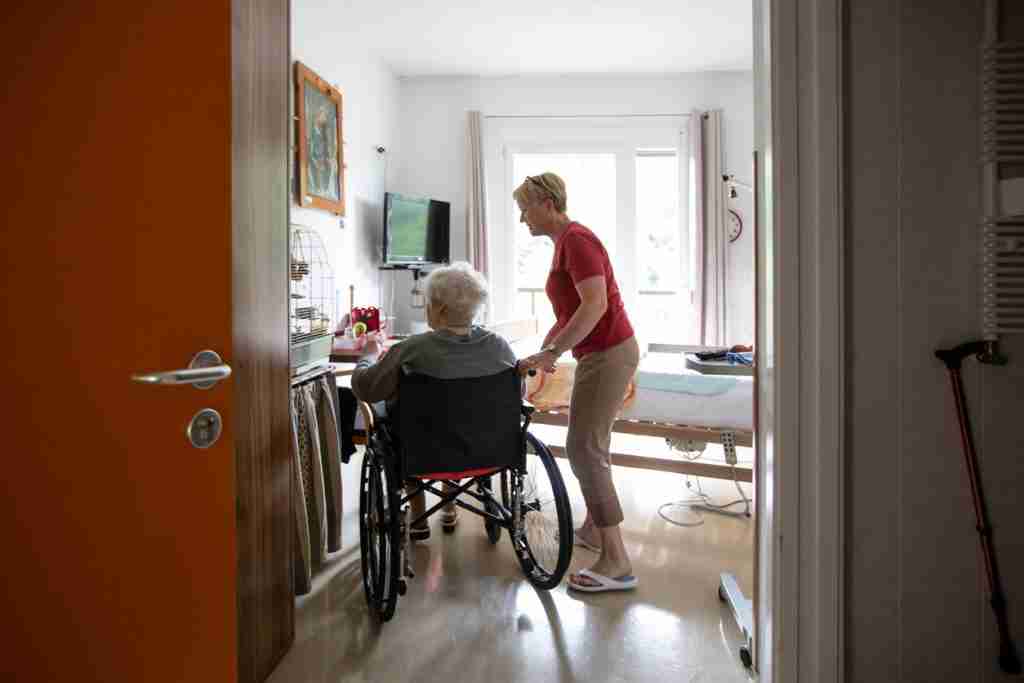
Kirk Ingram and Maddie Everson are an example of the program, run by the Metropolitan Center for Independent Living (MCIL). Every morning she logs into his computer and puts on his headset, offering him a sip of water. As Ingram gets to work at his home office, Everson heads to the kitchen to put away dishes. Next, she’ll fold laundry, maybe do some occupational therapy homework.
The University of Minnesota Rochester graduate student is one of the first members of Minnesota’s PCA) College Service Corps. Ingram, who was paralyzed from the neck down in a 2015 diving accident, said he hadn’t been able to find anyone to be his personal care assistant since the pandemic. Instead, he pieced together help from his wife, parents and siblings. He hopes the PCA College Corps continues and expands.
“It would be great to just have that revolving door of young professionals that are eager to learn,” Ingram said.
So far, 20 students are participating, said Jesse Bethke Gomez, CEO of MCIL, which is leading the pilot project. But he said 50 students have applied and they would like to serve 50 people over two years, then bring lessons learned to state leaders in 2026 so they can contemplate scaling up the program.
“I couldn’t be more distressed at the PCA urgency, and yet more delighted to see how we’re making these connections one at a time,” Bethke Gomez said.
PCAs and home health aides hold Minnesota’s most in-demand jobs, according to state labor market data, and the demand for their work is expected to continue to grow with an aging population.
Low wages in the field have contributed to the worker shortage. Students participating in the College Corps receive standard pay through the PCA agencies they are working with. Everson said she earns $19 an hour.
But on top of that, corps members receive taxable bonus awards: $1,500 for those working 10 weeks and 100 hours, up to $4,500 for students who commit to 30 weeks and 300 hours. The pilot program is funded by a $350,000 donation from the Margaret A. Cargill Fund and $500,000 from the state.
More people are needed to participate in this pilot program. Learn more at MCIL’s PCA College Service Corps.
(Source: Star Tribune)